
Last updated October 17, 2026
 Metal roofing
 Architectural shingles
 Tile roofing
 GAF
GAF Owens Corning
 Flat & low-slope
Free roof inspection with deck photos before we talk money - GAF and Owens Corning certified installation
Roofing Warning Signs: A Long Beach Homeowner’s Reference Guide
A dark spot on your ceiling and a curling shingle are both “roofing warning signs.” One may mean you have a season to plan. The other may mean you have a week before water reaches the drywall. Guides that list them side by side without telling you which is which aren’t actually helping you. Our complete guide to roofing in Long Beach fixes that. We’ve assigned every common warning sign a severity tier and a realistic timeframe, so you can make proportionate decisions instead of panicking or waiting too long. And because Long Beach sits in a specific coastal climate band, several of these signs behave differently here than they would ten miles inland.
Quick Answer
The most common roof warning signs in Long Beach include granule loss in gutters, curling or cracked shingles, rust streaking from flashing, interior ceiling stains, and daylight visible in the attic. Most of these are slow-burn issues you can document and schedule within 30 days. But an active ceiling stain that grows after rain, or water moving toward a light fixture, means you should call before the next storm. A free estimate from a roof repair team in Long Beach will tell you which tier you’re in.
Styles & brands we work with
Table of Contents
- The Three-Tier Severity System
- Granule Loss in Gutters: The Most Underread Sign in Long Beach
- Ceiling Stains: Active Leak or Old Cosmetic Mark?
- Salt-Air Warning Signs Unique to Coastal Zip Codes
- Attic Signs That Show Up Before Ceiling Damage
- Shingle Warning Signs: Curling, Cracking, and Blistering
- Rust Streaking and Flashing Corrosion
- Common Mistakes to Avoid
- When to Call a Professional
- Frequently Asked Questions
The Three-Tier Severity System
Every roof warning sign falls into one of three tiers. The tier tells you the timeframe. The timeframe tells you whether to grab a flashlight and a notebook, or grab the phone.
Tier 1: Watch and Document
These are the slow burns. They rarely indicate an active leak. They’re evidence of aging or early-stage material breakdown, and they don’t require a repair this month. You should photograph them, note the date, and check them again in 60 days.
Examples in Long Beach:
- Light, even granule loss across a gutter run (no bare spots visible from the ground)
- Faint rust beginning on a single pipe collar or vent stack
- Mild chalking on metal valleys that still hold their shape
- One or two shingles with slight edge curl, no cracking, in a shaded section of roof
- Small moss or lichen spots on north-facing slopes in Belmont Heights or Bluff Park
None of these mean your roof is failing. They mean it’s aging normally for a coastal Long Beach house. Document them with a photo from the ground or a ladder held steady by a second person. That’s it.
Tier 2: Schedule Within 30 Days
These signs suggest the roof’s protective layer is compromised in one or more specific areas, but water hasn’t moved into the living space yet. You have time to get estimates, compare them, and schedule the work without urgency. Pushing it past 30 days in Long Beach risks turning a Tier 2 into a Tier 3, because our autumn and winter rain patterns arrive reliably even after long dry spells.
Examples:
- Bare asphalt patches visible on multiple shingles where granules have completely worn away
- Rust streaking from more than two flashings, with visible pitting
- Shingles that crack when you gently lift an edge (checked from a ladder, not walked on)
- Attic daylight visible through gaps at the ridge line
- Insulation that’s visibly compressed and darker in specific bays near the eaves
- Ceiling stain that’s small, dry, and unchanged across multiple dry weeks
In our experience walking Long Beach roofs in Naples, Los Altos, and Bixby Knolls, these Tier 2 signs often cluster in the same few areas: valleys, pipe penetrations, and wherever the afternoon sun beats hardest on west-facing slopes. A roofing company in Long Beach giving you a written price will identify which of these areas matter and which are cosmetic.
Tier 3: Call Before the Next Rain
These indicate active water intrusion or a failure that’s likely to become one within days. Waiting means drywall damage, insulation replacement, and mold in Long Beach’s humidity, which keeps damp material wet far longer than it would stay wet in the Inland Empire. Call a roofer today. Not next week.
Examples:
- A ceiling stain that feels damp to the touch, grows after rain, or has a defined dark ring
- Water beads or drips from a light fixture, vent, or skylight during or after rain
- Sagging roof deck visible from the attic, or a soft section of roof when viewed from the ground
- Shingles missing entirely after wind, with torn underlayment exposed
- Flashing that’s pulled away from a chimney or wall, leaving a visible gap
One nuance about Long Beach specifically: our storms often arrive as two or three days of steady drizzle rather than one dramatic downpour. That means small breaches have time to saturate. A leak that started as a quarter-sized stain on Tuesday can be a two-foot stain by Friday. Tier 3 means the next rain is the deadline, not the calendar.
Granule Loss in Gutters: The Most Underread Sign in Long Beach
Granules are the sand-like mineral coating on asphalt shingles. They block UV light and give the shingle its fire rating. Every asphalt roof sheds some granules over its life, especially during the first year after install. The question is how much, and what the particles look like.
Here’s the tell: a normal amount of granules in your gutter looks like scattered dark sand mixed with regular Long Beach dust and bits of leaf debris. An alarming amount looks like someone emptied a jar of coarse pepper along the entire gutter run, especially if the granules are collecting in small piles at downspout elbows.
In Long Beach’s climate, granule loss matters more than inland because of the combination of marine-layer moisture and intense afternoon sun. The wet-dry cycle loosens the asphalt bond on aging shingles faster than a consistent dry climate would. We routinely see roofs in Wrigley and Zaferia that look ten years older than they are because the west-facing slopes bake every afternoon, then sit under cool marine air every evening.
How to check what you’re seeing:
- Pick a dry week. After a storm, gutter granules can be carried from adjacent areas and look worse than they are.
- Scoop a small amount from the gutter into a clear jar. Let it dry.
- Look at the shingle surface above that gutter run. If you see shiny asphalt patches or significant color variation from the ground, the granules aren’t just aesthetic loss, they’re structural loss.
- Count bare patches. One or two small ones is Tier 1. Multiple patches larger than a quarter across a single slope is Tier 2.
The brands we install, including IKO and Atlas, vary in how aggressively they shed granules in coastal environments. If you’re replacing, ask which product lines last longer in salt air rather than which look nicest in a brochure.
Ceiling Stains: Active Leak or Old Cosmetic Mark?
Most ceiling stains we’re called to look at in Long Beach are old. A past leak, a past repair, a stain that was painted over or simply left. But some are active. The difference is knowable with a flashlight and patience.
Here’s the method:
- Mark the stain’s outline lightly in pencil. A date beside it helps.
- Wait for a dry spell. A week with no rain is ideal.
- Check the stain in daylight with a bright flashlight held at an angle. Look for any sheen, dampness, or darker coloration at the center.
- Press the stain gently with a paper towel. If it comes away with any moisture or if the ceiling feels cool and spongy, the leak is active.
- After the next rain, compare the stain to your pencil marks. If it’s grown, it’s a Tier 3. Schedule before the next storm.
One factor specific to Long Beach is that houses built before the 1980s often have minimal or compressed attic insulation. That means a small leak can telegraph to the ceiling faster than in a newer build with deeper insulation that absorbs some of the moisture first. If you see a stain in a 1950s bungalow in Los Altos, treat it with more urgency than the same stain in a 2010s build in El Dorado Park.
Salt-Air Warning Signs Unique to Coastal Zip Codes
Long Beach’s coastal zip codes, 90802, 90803, and 90804, expose roofs to airborne salt that inland communities don’t deal with. That salt accelerates corrosion on metal components. Three warning signs are distinctive to this environment:
Rust Streaking from Flashing
Flashing is the metal that protects the joints where roof meets chimney, wall, skylight, or pipe. In salt air, galvanized steel flashing deteriorates faster. The visual cue is rust-colored streaking running down the roof from flashing edges, especially on the ocean-facing slope. A few beginning streaks are Tier 1. Heavy streaking with pitting or flaking metal is Tier 2 or 3, depending on whether water can now move behind the flashing.
Chalking on Metal Components
Chalking is the powdery residue that forms on painted metal surfaces, including metal valleys, drip edges, and vents. It’s caused by UV degrading the paint film. In coastal Long Beach, the salt accelerates this. Run your finger across a metal valley and if it comes away with a white or colored powder, the metal’s protective coating is spent. The metal itself may still be sound, but the clock is now ticking on corrosion.
Fastener Corrosion
Fasteners are the nails and screws holding your roof’s metal components in place. On roofs within a mile of the water, fasteners corrode first because they’re small, exposed, and often not marine-grade on older installations. Corroded fasteners can loosen flashing or allow water to track down the nail shaft. This is the hardest sign for a homeowner to see from the ground. It’s one of the reasons a rooftop inspection matters more on coastal homes than inland ones. Tamko and Boral both make product lines rated for coastal exposure, which matters if you’re planning a roof replacement in Long Beach within a mile of the water.
Attic Signs That Show Up Before Ceiling Damage
The attic tells you what’s coming before the ceiling does. Checking it twice a year, ideally in November before the rainy season and again in March after it, catches most roof problems while they’re still Tier 1 or Tier 2.
What to Look For
- Daylight through the roof deck: If you can see pinpoints or thin lines of daylight from inside the attic, you have gaps. Small gaps at ridge or eave edges are common on older homes. Gaps large enough to see the sky through a quarter-sized hole are Tier 2.
- Insulation compression: Insulation loses effectiveness when it’s pressed down. Water from a slow leak compresses insulation in specific bays, leaving it darker, matted, and thinner than neighboring bays.
- Wood staining: Dark streaks or water rings on the underside of the roof deck, rafters, or trusses. Old staining is dry and amber-colored. Active staining is darker, often soft to the touch, and smells damp.
- Rust on exposed nail points: Nails that poke through the deck into the attic rust when they carry moisture. Rusted nail points in clusters suggest condensation or a slow leak, particularly near eaves where marine air collects.
- Animal activity: Rodent or bird entry points are roof holes. They’re also insulation compressors. In Long Beach’s older neighborhoods, particularly around Alamitos Beach and Rose Park, attics connect to crawl spaces that make excellent rodent highways.
How to Check Safely
- Wear a dust mask, long sleeves, and work gloves. Attic insulation, especially older fiberglass, irritates skin and lungs.
- Carry a bright flashlight. The type you’d keep in the car for emergencies is fine.
- Walk only on the joists, never between them. The ceiling below will not hold your weight.
- Start at the eaves and work toward the center, looking at the deck surface and the insulation in each bay.
- Photograph anything you find so you can compare it in six months.
If you’re not comfortable going into the attic, that’s fine. This is a service inspection item, not a DIY requirement. We’ve walked attics in every Long Beach neighborhood from Belmont Shore to North Long Beach, and the patterns repeat: the older the house, the more likely the attic reveals something the roof surface doesn’t.
Shingle Warning Signs: Curling, Cracking, and Blistering
Shingles age the way people do: gradually, then all at once. The early signs are subtle. By the time they’re dramatic, you’re often past repair and into replacement territory.
Curling
Curling is when shingle edges lift upward at the corners, forming a shallow cup. The cause is usually age-related shrinkage. The asphalt becomes brittle, the shingle loses flexibility, and the edges pull up. In Long Beach’s intense sun, curling accelerates on west and south-facing slopes. A couple of curled shingles in a shaded area is Tier 1. Curling across an entire sun-exposed slope, especially if the tabs look like they’re reaching upward, is Tier 2 or 3 depending on whether any cracks have opened.
Cracking
Cracks form when the shingle can’t flex with temperature changes anymore. They appear as thin dark lines running vertically through the tab. A cracked shingle is a pathway for water, but not necessarily an active leak, because the underlying shingle course and underlayment still provide some defense. Multiple cracks across a slope tighten that defense. If you can see cracks from the ground with the naked eye, schedule an inspection.
Blistering
Blisters are small raised bumps on the shingle surface, sometimes open at the top, sometimes still sealed. They form when moisture in the shingle heats up and expands, or when manufacturing trapped gas in the mat. Blisters that remain closed are cosmetic. Blisters that pop open expose the asphalt to UV and accelerate granule loss. On a Long Beach roof with morning marine moisture and hot afternoons, blistering is more common than in drier inland communities.
When These Signs Mean Replacement
Alone, none of these signs means you need a new roof. Together, they paint a picture of a roof nearing the end of its service life. If you’re seeing curling on the sunny slope, granule loss in the gutters, and cracking across a third of the roof surface, you’re likely looking at replacement within a year or two. That’s time to get a roof replacement quote in Long Beach and plan the budget, not time to panic.
Rust Streaking and Flashing Corrosion
Flashing gets less attention than shingles because it’s less visible and harder to understand. But in coastal Long Beach, flashing fails faster than shingle. It’s the first place salt air attacks, and it’s the source of a surprising share of the leaks we repair.
Where Flashing Lives on Your Roof
- At the base of chimneys
- Where roof slopes meet vertical walls (called step flashing)
- Around skylights and roof windows
- At pipe penetrations and vent stacks
- In valleys where two slopes meet
- At the drip edge along the eaves and rakes
What Rust Streaking Tells You
Rust streaking running from any flashing location is the visible sign that the galvanized coating has failed and the steel beneath is oxidizing. A faint streaking is Tier 1. Deep rust with flaking or holes is Tier 3, because water can now move behind the flashing and into the roof deck without touching a single shingle. We’ve seen active leaks in Lakewood Village and El Dorado Park where the shingles were fine, but the chimney flashing had rusted through along the entire lower edge.
The salt air factor: homes within a mile of the ocean, roughly everything south of 7th Street to the water, see flashing corrosion two to three times faster than homes in North Long Beach or Bixby Knolls. If your home is in the coastal band, check flashing twice a year, even if the shingles look healthy.
For replacement flashing in salt-air zones, we use materials rated for coastal exposure rather than standard galvanized. It costs a little more upfront and lasts significantly longer. Several of the product lines from IKO and Atlas include coastal-rated flashing accessories, which is useful to know when you’re comparing quotes.
Common Mistakes to Avoid
- Ignoring a small stain because it’s “probably old.” Most stains are old, but the ones that aren’t cost thousands more after a month of Long Beach drizzle. Pencil-mark it and check after the next rain. It takes two minutes.
- Treating all warning signs as emergencies. A curling shingle doesn’t mean the roof is about to collapse. Overreacting leads to hasty decisions and overpaying. This guide’s tier system exists so you don’t have to guess.
- Walking on the roof to inspect it yourself. Foot traffic on aging shingles causes granule loss and can crack brittle tabs. Most signs are visible from the ground or from a ladder held by a second person.
- Cleaning gutters and assuming the job is done. Gutters full of granules are telling you about the roof, not just the gutters. scoop some and look.
- Waiting until the rainy season to get an inspection. November and December are peak demand for every roofing company in Long Beach. If you catch a Tier 2 sign in August and schedule for October, you’ll get better pricing and better scheduling than waiting for the first storm.
- Painting over a stain without checking the attic. The ceiling stain is the symptom. The attic is where the source lives. Paint over it, and you’ll watch a fresh stain bloom through the new paint after the next storm.
- Assuming all contractors work the same way. The clean-up after a repair matters as much as the repair itself, especially with kids and pets in the house. Ask what protection the crew uses inside your home before the work starts.
When to Call a Professional
Call a professional when you’ve identified a Tier 3 sign, when a Tier 2 sign has been present for more than 30 days without resolution, or when you simply don’t want to climb a ladder and look. Some homeowners check everything themselves and that’s great. Others want a trained set of eyes. Both are legitimate, and our DIY vs professional roofing guide can help you decide which path fits your situation.
Specific scenarios that warrant a call this week: a ceiling stain that grew after the last rain, water moving toward a light fixture, missing shingles after a wind event, any sagging visible from the ground, or flashing that’s pulled away from a wall or chimney. These are not observational situations anymore. They’re active failures waiting for the next rain.
Birchbark Roofing Long Beach offers free estimates across every Long Beach zip code. Call (562) 512-7366 to schedule one. You’ll get a written price before any work starts, and the person answering the phone is a live human, any hour of the day or night.
Frequently Asked Questions
The earliest signs are granule loss in gutters, curling shingle edges on sun-exposed slopes, and rust starting on flashings. In Long Beach’s marine climate, also watch for salt-air corrosion on metal components and condensation-related staining in attics during damp, overcast periods. These signs appear years before interior damage, which is why checking twice a year matters.
Mark the stain with a pencil outline, check it during a dry week with a flashlight and paper towel for any moisture, then compare it after the next rain. If the stain grows, feels damp, or has a dark ring, the leak is active. Call (562) 512-7366 for a free inspection before the next storm.
Some granule loss is normal throughout a shingle’s life. A thin, even scatter of dark sand in the gutter is expected. Piles of granules collecting at downspout elbows, or bare asphalt patches visible on the shingles above, are signs of accelerated wear that require an inspection. Replacement may not be necessary, but the roof’s remaining service life is shorter.
Salt air accelerates corrosion on metal flashing, fasteners, and vents. Homes within a mile of the ocean experience flashing deterioration two to three times faster than homes inland. Look for rust streaking from chimney and wall flashings, chalking on metal valleys, and fastener corrosion, which is harder to see without a rooftop inspection.
Look for daylight through the roof deck, compressed or darkened insulation, wood staining on the deck or rafters, rust on exposed nail points, and any sign of animal entry. Inspect from the joists only, never between them, and wear a dust mask and gloves. Check in November before the rains and again in March after they’ve passed.
Most residential roof repairs in Long Beach range from $450 to $1,800 depending on the scope. Small flashing repairs and pipe collar replacements sit at the lower end. Widespread flashing replacement, multiple shingle repairs, or deck work runs higher. Exact pricing depends on pitch, accessibility, and materials. Call (562) 512-7366 for a written quote before any work starts.
The Bottom Line
Roof warning signs are information, not emergencies. The job is to read them accurately: which tier they fall into, what timeframe they imply, and what the Long Beach climate does to accelerate or slow each one. Granule loss is early warning. Rusted flashing in the coastal band is more urgent than the same rusting would be inland. A ceiling stain that doesn’t grow after rain is probably old, but it costs two minutes to mark and confirm. Check the attic before the ceiling tells you something you already should have known. And when a sign moves into Tier 3, call a professional before the next rain arrives, or browse our more guides & resources to stay ahead of problems. A written price, a clear scope, and a crew that respects your home make the repair itself the easy part.
Written by Erik Lindgren, Owner at Birchbark Roofing Long Beach, serving Long Beach since 2000.
See the difference
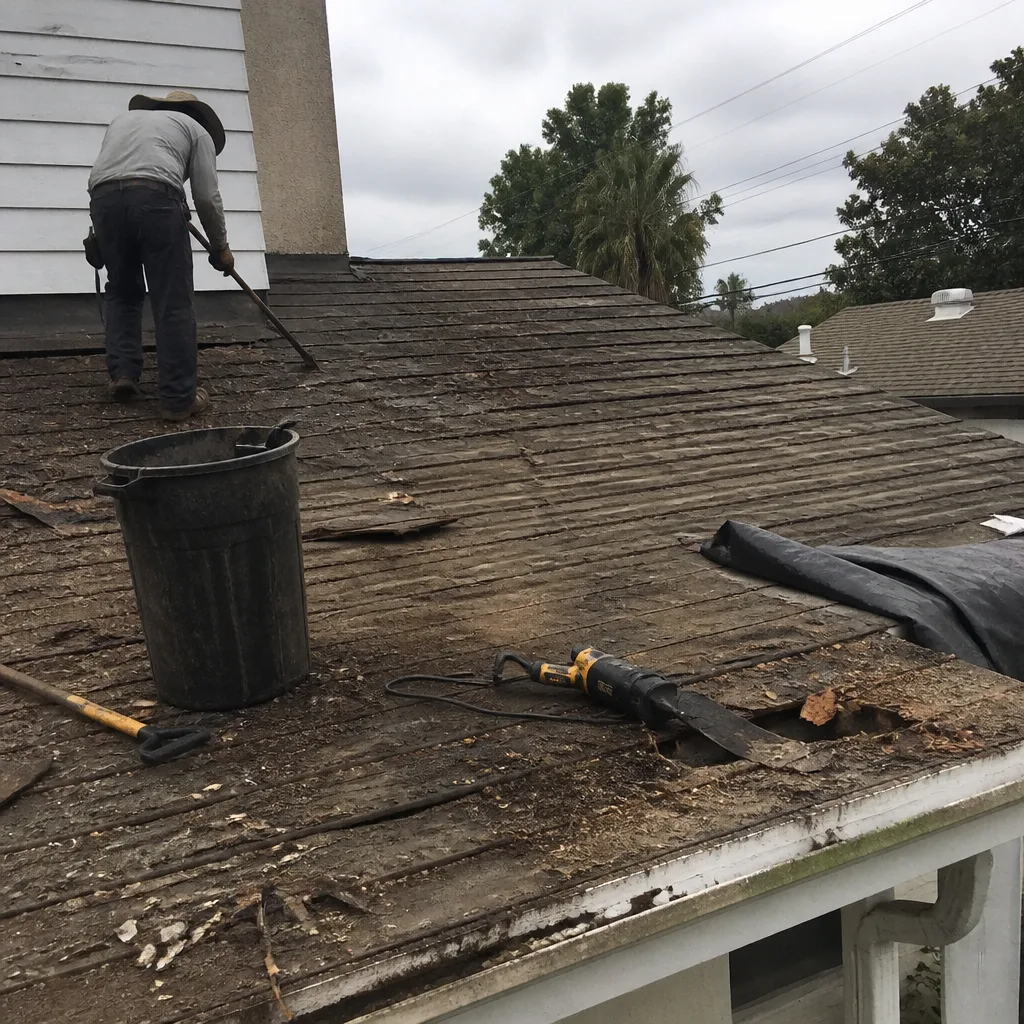 Before
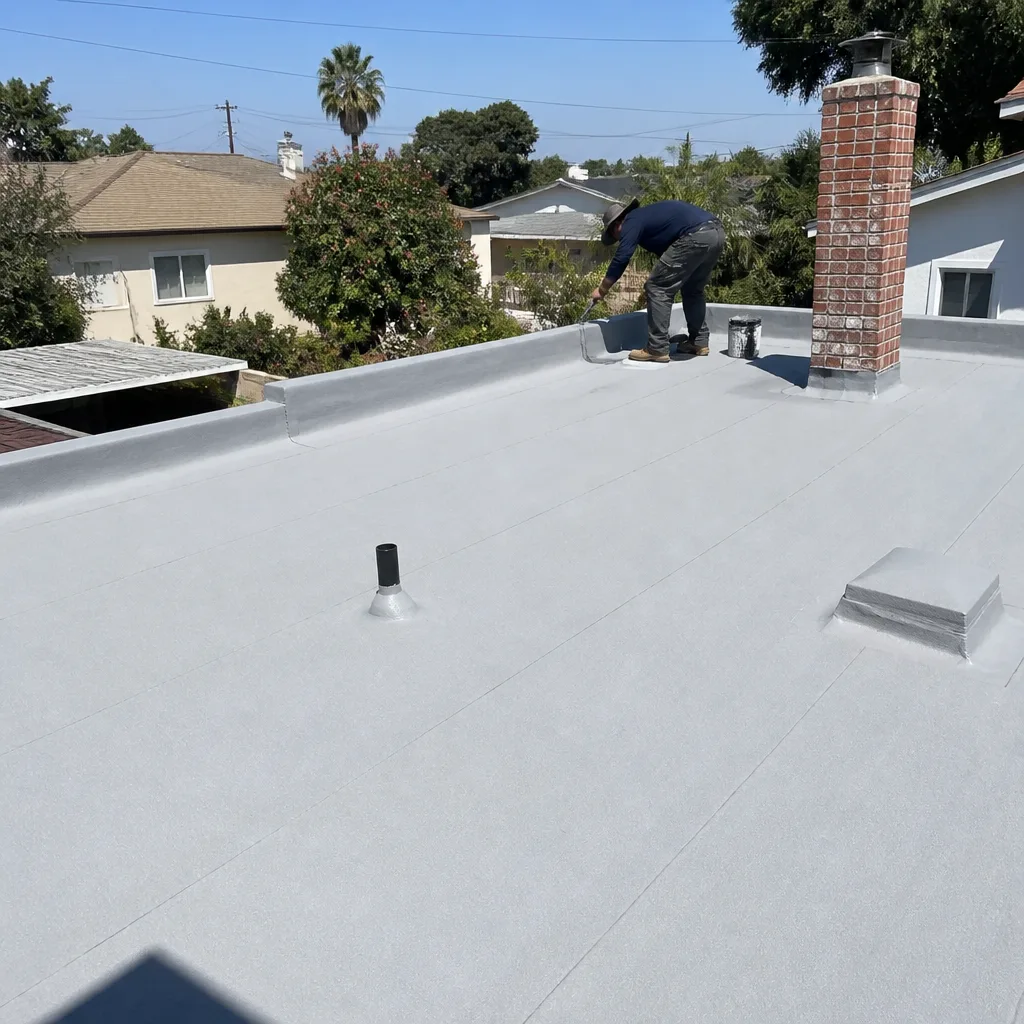
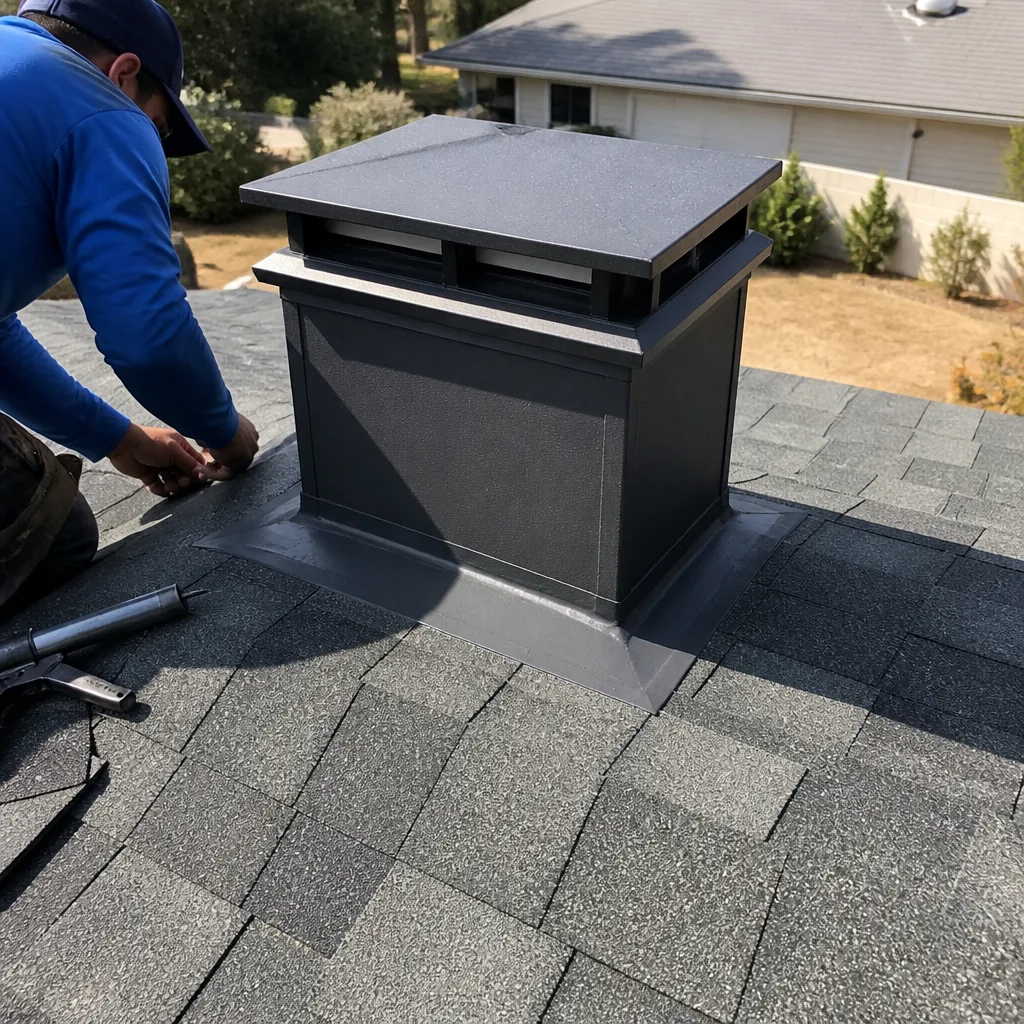 After
After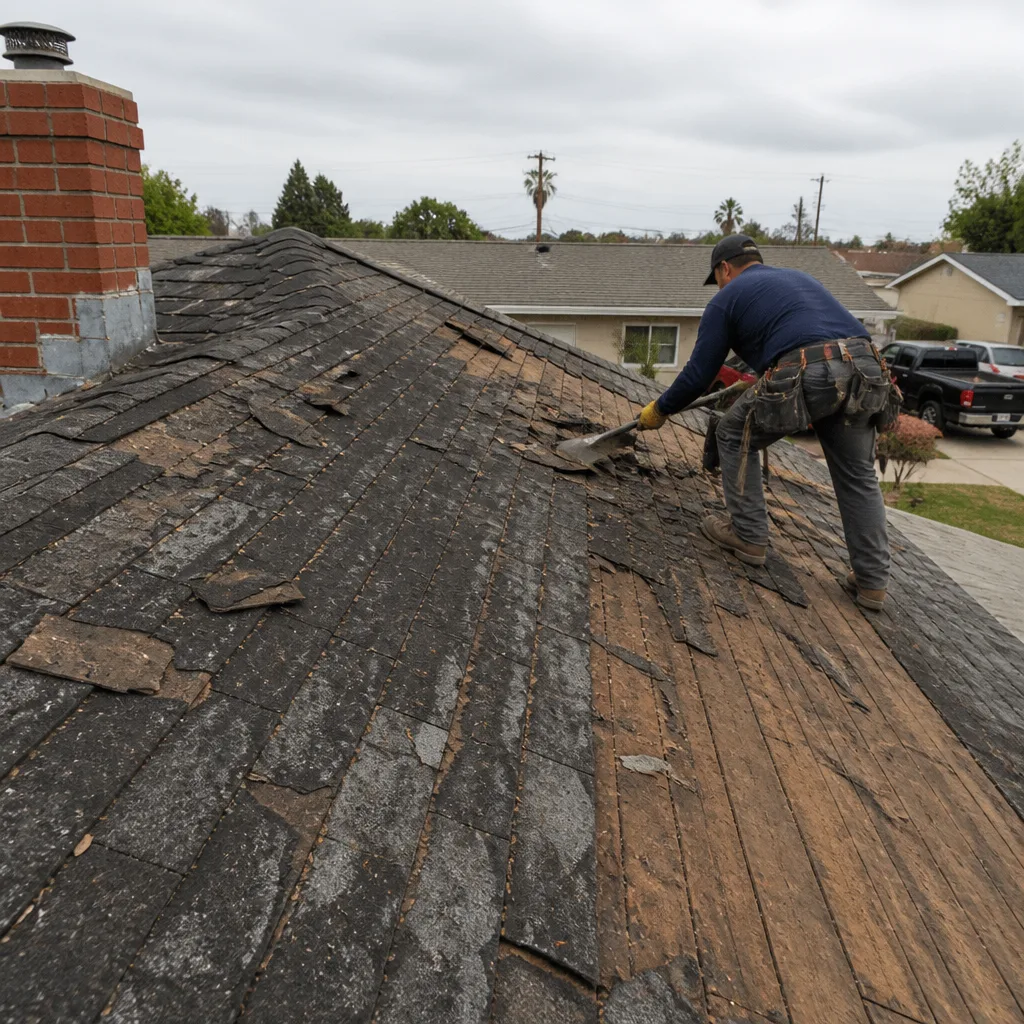 Before
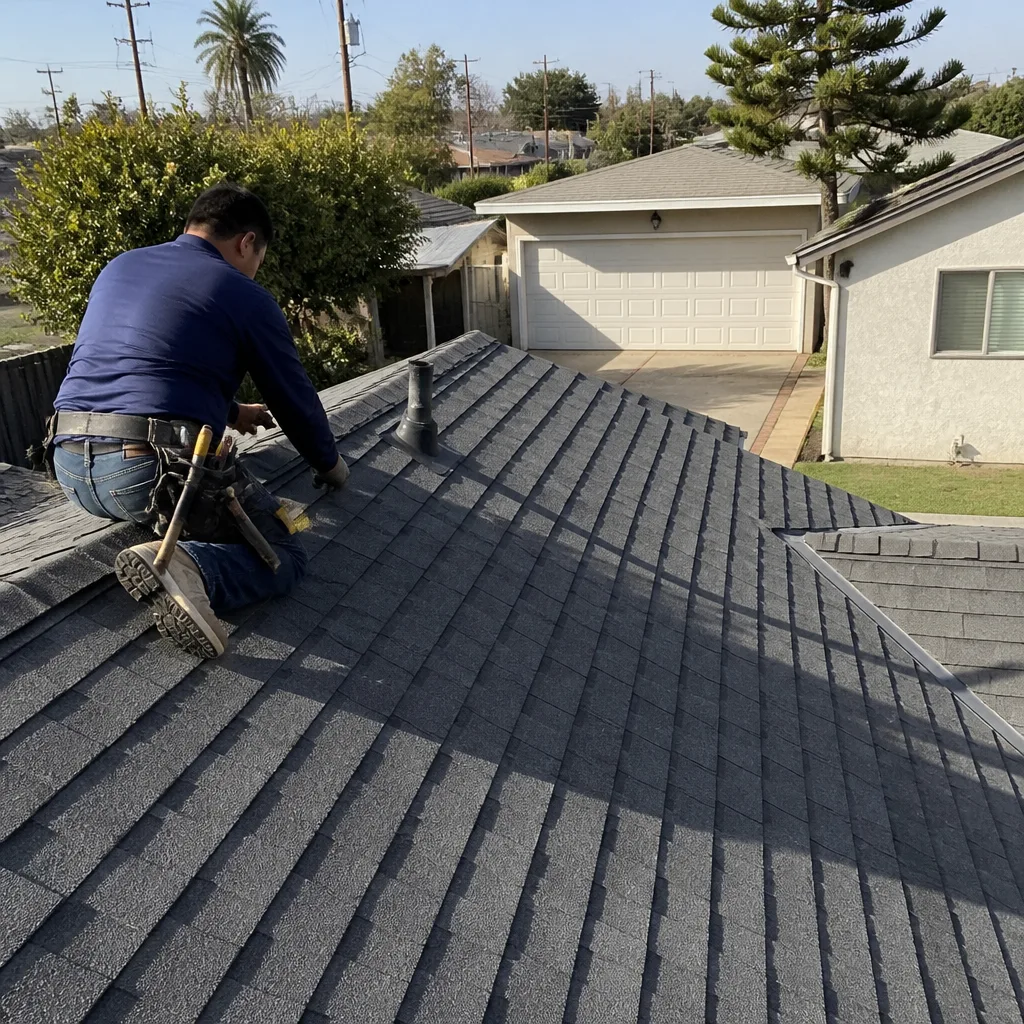 After
After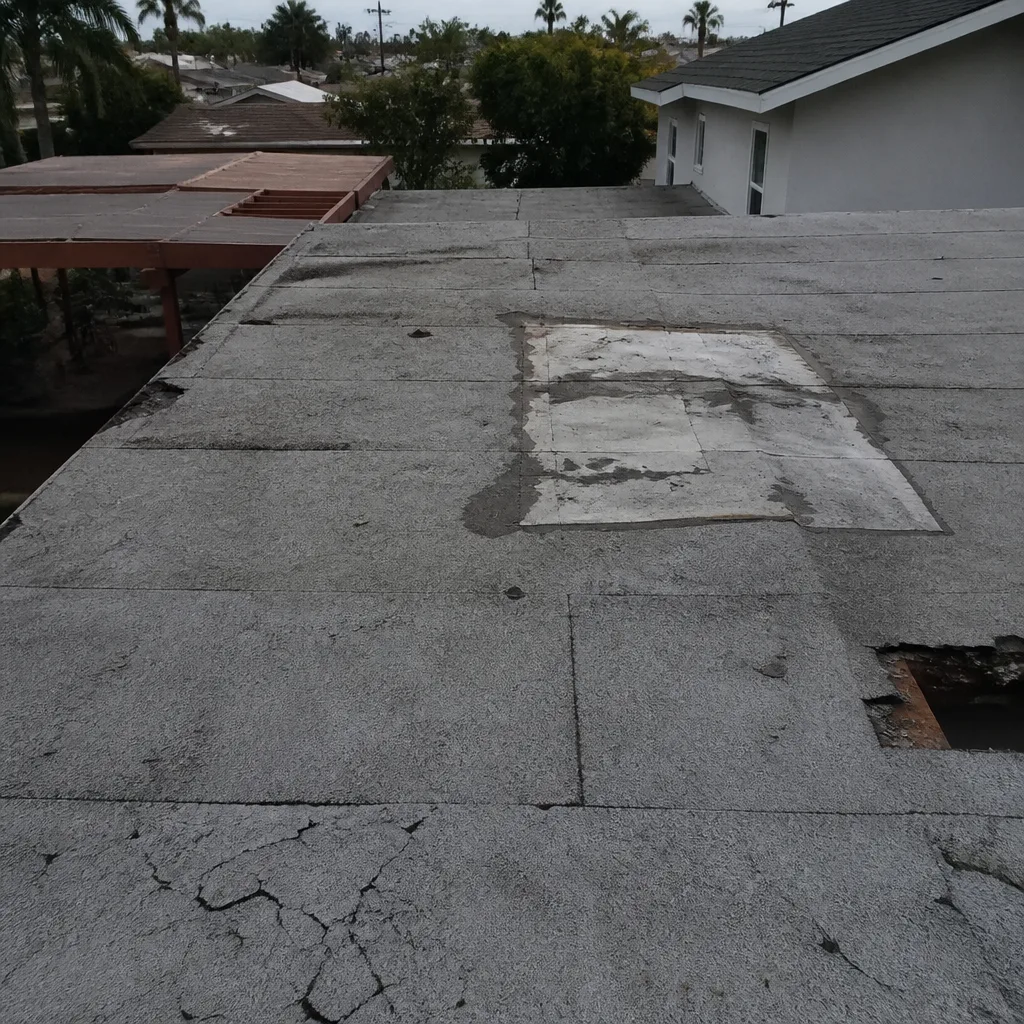 Before
 After
After