
Last updated October 17, 2026
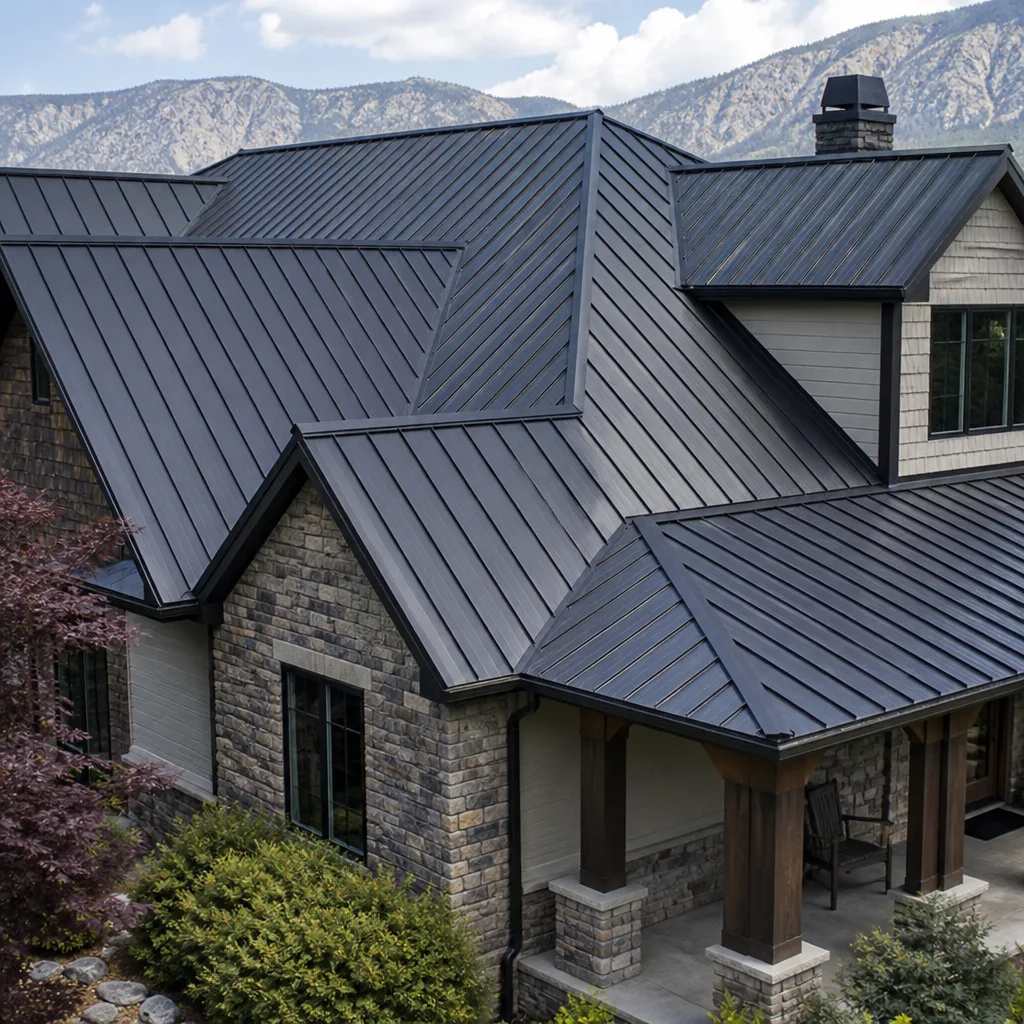 Metal roofing
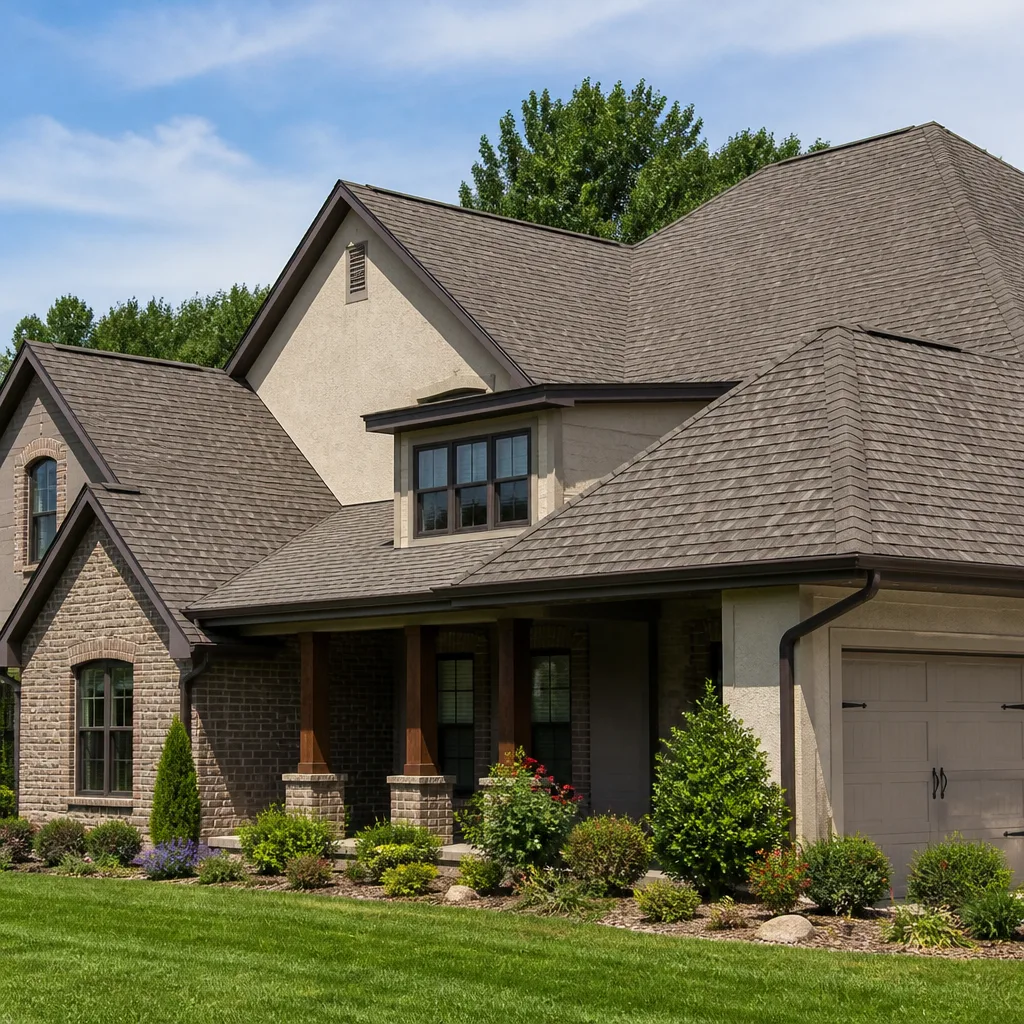 Architectural shingles
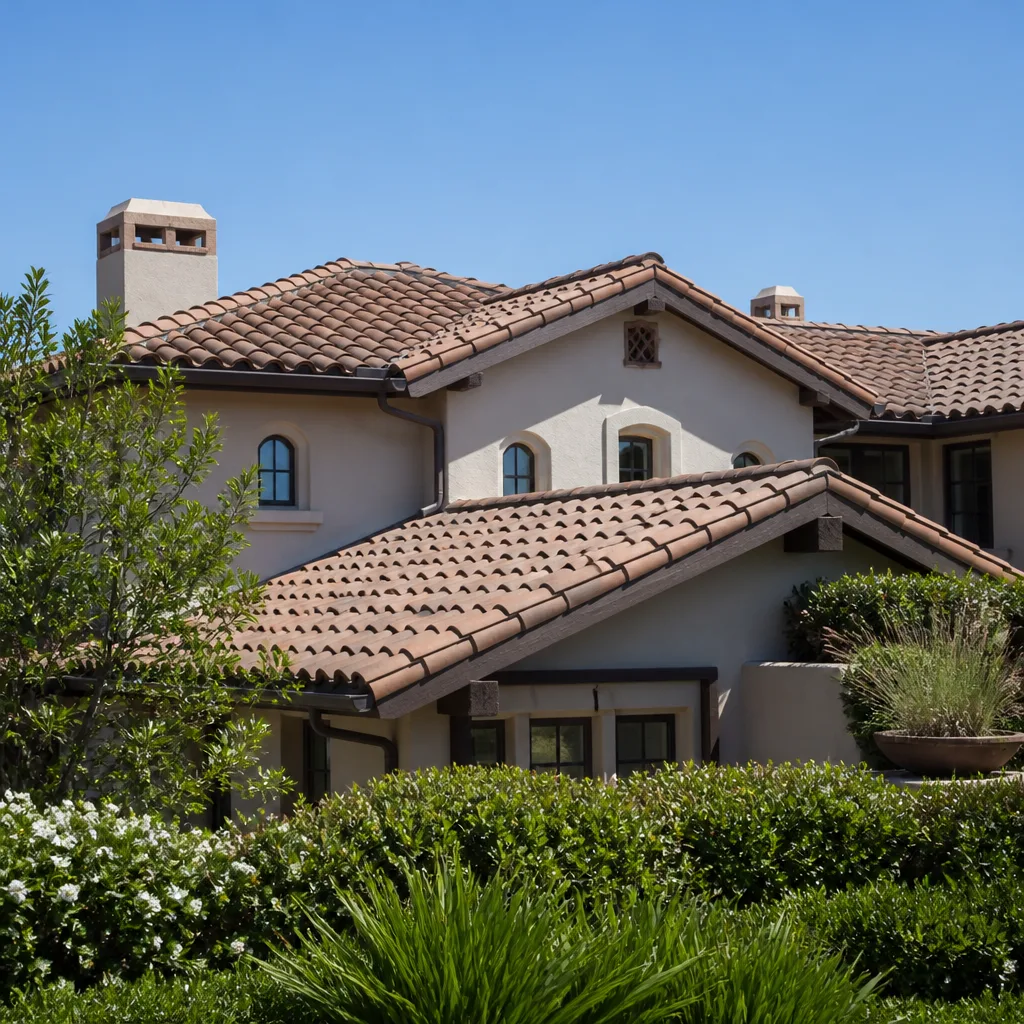 Tile roofing
 GAF
GAF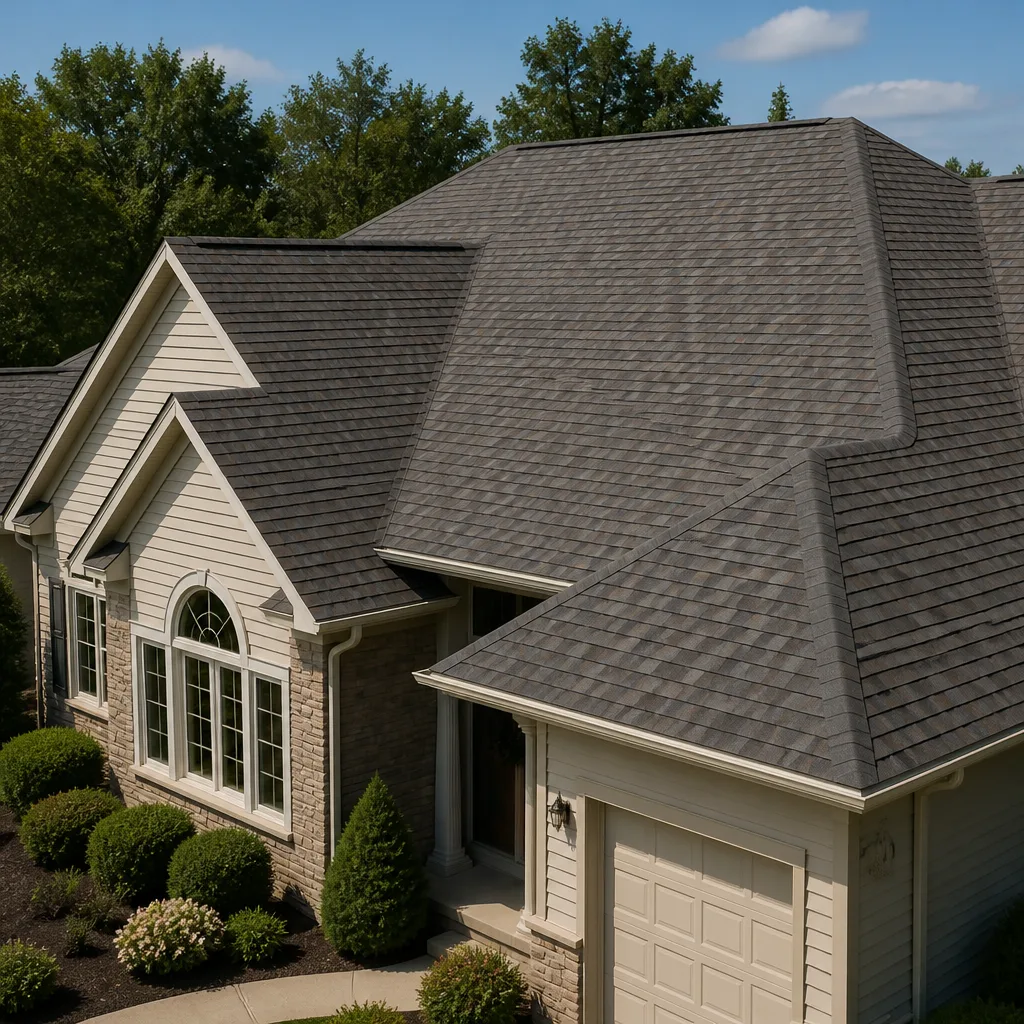 Owens Corning
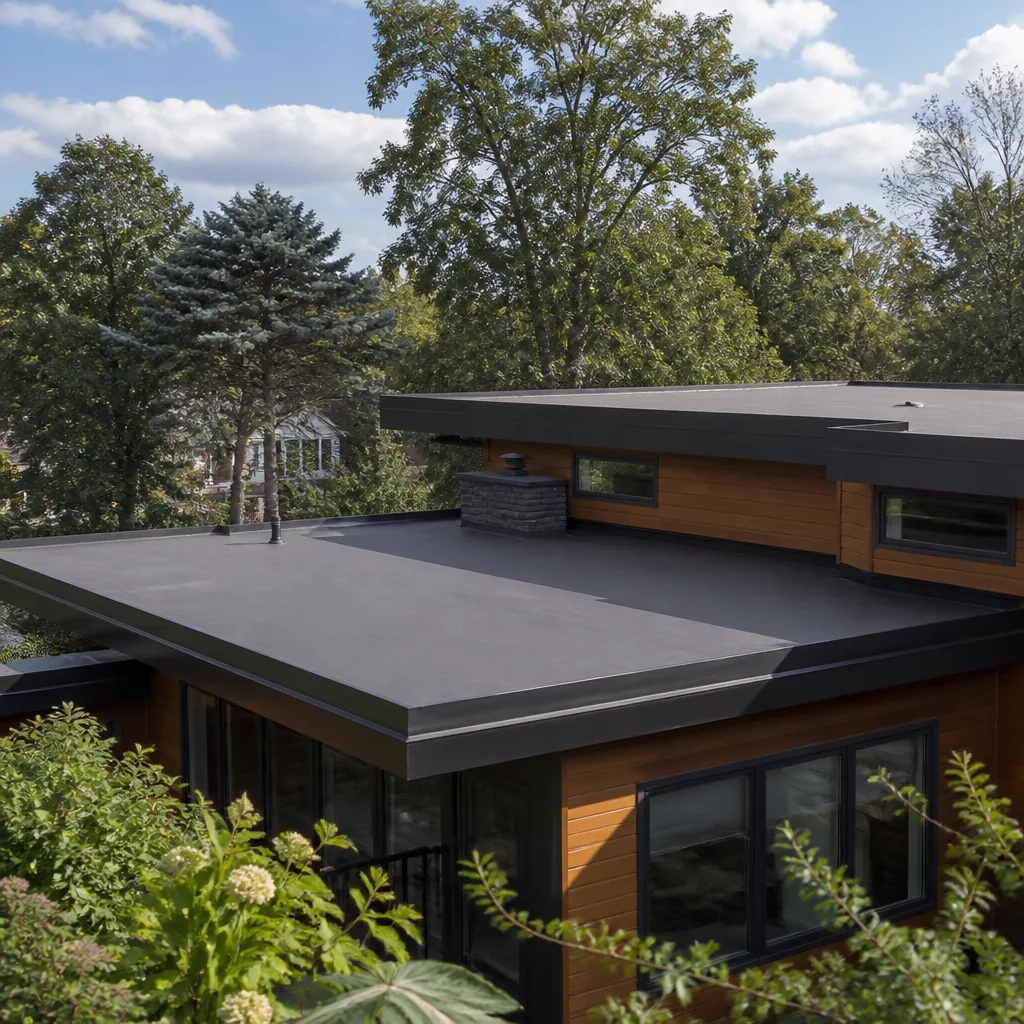 Flat & low-slope
Free roof inspection with deck photos before we talk money - GAF and Owens Corning certified installation
Roofing Permits, Codes & Inspections in CA: What You Need to Know
Roughly one in five California homes that go up for sale have unpermitted work hiding in their records, and roofs are among the most common culprits. The seller rarely finds out until escrow stalls, the buyer’s lender asks for the permit file, and that new roof suddenly needs to be re-inspected at best, torn off at worst. This guide breaks down how California’s split between state Title 24 energy codes, local Long Beach amendments, and HOA overlays actually works, so you know exactly who is responsible for what before anyone climbs a ladder. For a broader overview, see The Complete Guide to Roofing in Long Beach.
Quick Answer
In Long Beach, most full roof replacements require a building permit from Long Beach Building & Safety, while most repairs smaller than 100 square feet and limited to one roofing layer can be done without one. All new roof coverings must meet California Title 24 cool-roof standards, which in Long Beach’s climate zone means a minimum aged solar reflectance and thermal emittance rating. The permit is what proves the work was inspected and passed, and skipping it can void material warranties and complicate a future home sale.
Styles & brands we work with
Table of Contents
- When a Permit Is Required vs. When It’s Repair
- Title 24 Cool-Roof Requirements in Long Beach: What Actually Applies
- The Long Beach Building & Safety Permit Process, Step by Step
- What Inspections Cover, When They Happen, and Who Shows Up
- What Unpermitted Roofing Work Does to Your Insurance Claim
- How to Verify Your Contractor Actually Pulled the Permit
- When the HOA Adds a Third Layer of Rules
- What a Long Beach Roofing Permit Costs and Who Pays It
When a Permit Is Required vs. When It’s Repair
California’s building code treats re-roofing and roof repair as two different animals, and the line between them is specific. A permit is required any time you remove more than 100 square feet of existing roofing, replace structural sheathing, change the roof covering material, or alter the roof’s slope. That covers essentially every full roof replacement and most tear-offs. What qualifies as repair without a permit is narrower than most homeowners assume: patching a small leak, replacing a few individual shingles or tiles, sealing a vent collar, or re-roofing an area under 100 square feet with the same material.
In Long Beach, the threshold follows the California Residential Code with local enforcement by Long Beach Building & Safety. We’ve seen plenty of homeowners in neighborhoods like Belmont Heights and Los Altos assume that because they’re keeping the same shingle style, no permit is needed. The code doesn’t care about style, it cares about scope. If the square footage of removed roofing exceeds 100, the city expects a permit, an inspection, and a final sign-off.
One practical reality: many roofers quote lower because they plan to skip the permit. The savings look real on the estimate but disappear when the next appraiser asks to see the permit card. A roof with no permit is a roof with no inspection record, and in a city where most sales involve lenders, that record is the whole conversation.
- Permit required: tear-offs over 100 sq ft, re-roofs with new material, replacement of damaged sheathing, any work that changes the roof structure
- No permit needed: isolated shingle replacement, patching under 100 sq ft, resealing flashings and vents, small repairs that don’t remove a full roof section
- Gray zone: multiple small patches over time that collectively exceed 100 sq ft – the city treats cumulative area as the trigger
If you’re unsure whether your project crosses the line, ask the contractor to show you the permit application before work starts. A licensed roofer who intends to pull the permit will have no hesitation. If they start telling you why the permit “isn’t really necessary for this one,” that’s your signal to call someone else.
Title 24 Cool-Roof Requirements in Long Beach: What Actually Applies
Since 2014, California’s Title 24 Building Energy Efficiency Standards have required most steep-slope roofs replaced in the state to meet cool-roof minimums. In Long Beach’s climate zone (CEC Zone 6, the South Coast), a new shingle roof must generally carry an aged solar reflectance of at least 0.20 and a thermal emittance of at least 0.75. Those numbers aren’t arbitrary: they reduce attic temperatures in a city where summer heat settles over the coastal plain and the marine layer traps warmth for days at a time. For year-round maintenance tips, read our Seasonal Roofing Care for Long Beach: Year-Round Homeowner’s Guide.
The good news for Long Beach homeowners is that most major shingle lines from Owens Corning, IKO, Atlas, and Tamko now carry cool-roof options certified under the Cool Roof Rating Council’s product directory at no meaningful cost difference. Lighter colors generally meet the reflectance threshold out of the box; darker colors often rely on specialized granules that reflect infrared rather than visible light. That’s why a “cool roof” does not have to be a white roof, and why a black architectural shingle can still comply.
There’s a second layer: the City of Long Beach adopted the state’s Title 24 energy code without adding its own roofing energy amendment, which means state minimums are the local minimums. But many Long Beach HOAs operate with design standards stricter than the energy code: a Bixby Knolls HOA may require specific shingle profiles or colors that effectively dictate which cool-rated products you can use. The interaction matters, because a shingle that clears Title 24 but violates the HOA’s color palette creates a new kind of expensive problem.
Title 24 also affects the attic, not just the roof surface. When you replace more than 1,000 square feet of roof on an existing home, the code expects the attic insulation to be brought up to current R-value minimums if it’s not already there. In older Long Beach neighborhoods like Wrigley, where attics often hold four inches of original 1940s insulation, that can add cost to an otherwise straightforward re-roof. It’s not optional; it’s part of code compliance for the permit to be closed.
We recommend asking your roofing contractor to print the specific CRRC product rating for the shingle they’re proposing, then checking that rating against the Title 24 code sheet before you sign. It takes five minutes and removes the most common compliance surprise we see in Long Beach.
The Long Beach Building & Safety Permit Process, Step by Step
Pulling a roofing permit in Long Beach is not hard, but it does follow a sequence. Here’s how it works when the contractor submits correctly the first time:
- Application and plan review. The contractor submits the permit application through Long Beach Building & Safety, including the roof plan, product specifications, and Title 24 compliance documentation. For straightforward re-roofs, this is usually a same-week approval. For structural changes, plan review may take longer.
- Permit issuance. Once approved, the city issues the permit and the fee is paid. Long Beach bases the roofing permit fee on project valuation, and for a typical single-family re-roof it runs in the low hundreds of dollars. We’ll cover exact ranges in the cost section below.
- First inspection: underlayment and nailing. The inspector arrives after tear-off and underlayment installation but before shingles cover the work. They check fastener pattern, underlayment lap, flashing at penetrations, and the condition of the decking. This is the inspection that catches hidden defects.
- Mid-roof inspection (when triggered). If the roof includes complex valleys, skylights, or sections requiring additional structural reinforcement, Long Beach may schedule a second inspection at the halfway point. Your contractor should tell you if this applies to your job.
- Final inspection. After shingles, flashing, vents, and ridge cap are complete, the inspector signs off on the finished roof, verifies the cool-roof product markings, and closes the permit. You should receive a copy of the final inspection record.
The Big question we hear most often from Long Beach homeowners: who schedules the inspections? The contractor does, and they should coordinate times with you in advance because the homeowner or a representative is expected to be present for the final. The inspection happens during business hours, takes 20 to 45 minutes, and the inspector checks only what’s visible – which is why the underlayment inspection matters so much; it’s the only time the decking and layer underneath the visible roof is examined.
If any inspection fails, the contractor corrects the item and calls for re-inspection. A failed inspection is not a mark against you; it’s the system working. The permit isn’t closed until the city signs off, and that final record is what protects you later.
What Inspections Cover, When They Happen, and Who Shows Up
The city inspector who visits a Long Beach roof is not a roofer; they are a code enforcement professional checking a specific list. That list is public, and homeowners should see the same checklist the inspector uses so there are no surprises:
- Decking condition: rotted, delaminated, or undersized sheathing must be replaced before underlayment.
- Underlayment: the correct product for the roof slope, lapped properly, fastened at the specified spacing.
- Flashings: metal at all valleys, chimneys, skylights, vent pipes, and sidewalls, installed in the correct order so water always drains down and out.
- Fastener pattern: nail count and placement per the shingle manufacturer’s published installation instructions – Long Beach inspectors reference these documents directly.
- Ventilation: intake and exhaust balance sufficient for the attic area, because California code ties ventilation to roof covering life and energy compliance.
- Cool-roof marking: the final surface product matches the CRRC-rated product listed on the permit application.
Inspectors in Long Beach are assigned by district, and the same inspector typically handles all trades in that district rather than specializing in roofs alone. That means they rely on the submitted product documents and the manufacturer’s installation sheets. A contractor who shows up with those documents printed and organized gets a smoother inspection than one who improvises, which is why our crews carry the full packet on inspection day.
The timing matters more than most people think. Storms don’t reschedule for inspectors, and Long Beach’s winter months can bring several days of consecutive rain. A roof sitting in underlayment waiting for an inspection is exposed. A contractor who sequences tear-off, inspection, and shingle installation tightly – typically finishing the visible roof within a day or two after the underlayment inspection – keeps the home drier. That kind of sequencing is the quiet difference between a smooth project and a ceiling stain.
What Unpermitted Roofing Work Does to Your Insurance Claim
Insurers are not in the business of punishing oversight, but they are in the business of underwriting risk. When a claim is filed and the adjuster discovers that the roof was replaced without a permit, the claim doesn’t automatically get denied. Watch for Roofing Warning Signs: A Long Beach Homeowner’s Reference Guide before problems reach this stage. What usually happens is messier: the adjuster documents the unpermitted condition, questions the quality of the installation regardless of how well it was actually done, and may reduce the settlement or cite a policy exclusion for losses caused by faulty workmanship.
That last point is where Long Beach homeowners get hurt most. Most California homeowners policies cover storm damage but exclude damage that results from defective installation. Without an inspection record, the insurer has an easy argument that the roof failure came from the installation, not the storm, even when that argument would collapse under scrutiny. The permit and its inspection file are your evidence that the roof met code at the time it went on.
There’s a second, quieter insurance effect: carrying unpermitted work can affect your premium at renewal even when no claim is filed. Insurers increasingly pull permit records when they underwrite or renew a policy. A roof replaced without a permit raises the insurer’s estimate of the home’s replacement cost risk, and the premium follows.
The interaction with a future sale can be even more direct. Many lenders in California require proof that any roof replacement within a certain look-back period was permitted before they’ll fund the buyer’s mortgage. If you own that unpermitted roof and sell later, you’ll be the one paying to have it inspected after the fact – and Long Beach’s after-the-fact review process is more expensive than the original permit would have been.
For a deeper look at what a repair versus a replacement means for your specific roof, see our Roof Repair in Long Beach and Roof Replacement in Long Beach pages.
How to Verify Your Contractor Actually Pulled the Permit
Promising to pull the permit and pulling it are not the same thing, and the gap between them is where unpermitted roofs begin. Long Beach makes verification straightforward, and it takes under ten minutes:
- Ask for the permit application number before work starts. Once the contractor submits the application, Long Beach assigns a reference number. A contractor who’s actually submitted will have it the same week. A contractor who stalls is usually a contractor who hasn’t submitted.
- Check the Long Beach Building & Safety permit portal. The city maintains an online permit lookup where you can search by address and see the current status of any permit application. You don’t need an account to search.
- Verify the contractor’s license on the CSLB website. The Contractors State License Board database shows the license class, status, workers’ comp coverage, and any disciplinary actions. A C-39 roofing license is the specific license class for roofing work in California.
- Request a copy of the issued permit card. Long Beach issues the permit once the application is approved and fees are paid. The contractor should give you a copy and post the permit card visibly on the job site, usually in a front window or on the permit board by the driveway.
- Ask for the inspection record at final. When the job is done, ask the contractor for the final inspection sign-off before making the final payment. If they can’t provide it, the permit isn’t closed, and your roof officially doesn’t exist in the city’s records.
We recommend doing step one and two before you sign any contract. It’s the clearest early signal of how the rest of the job will go. A roofer who handles the permit properly is likely to handle the tear-off, the clean-up, and the follow-through properly too.
When the HOA Adds a Third Layer of Rules
California law gives HOAs the right to impose architectural standards on roof replacements, but it also limits how far those standards can reach. Since 2012’s Civil Code changes, HOAs in California cannot prohibit a homeowner from installing a roof that meets state energy standards. In practice, that means a Long Beach HOA can require a specific color line or shingle profile, but they cannot refuse a roof solely because it’s cool-roof rated, a sensible admission that the state’s climate goals don’t bow to design committees.
In Long Beach, where several older neighborhoods like Naples and Belmont Shore have active HOAs with detailed architectural guidelines, the practical question is timing. The HOA approval should run in parallel with the city permit application, not after it. A homeowner who has the city permit but not the HOA sign-off can end up with an approved roof design that the HOA rejects, a costly delay that’s easy to prevent with a simple application to the HOA board before ordering materials.
We’ve seen some HOAs require a specific underlayment color to match the surrounding streetscape or a particular shingle brand across all homes on a cul-de-sac. That’s their right under California law as long as the requirement doesn’t conflict with Title 24. The contractor should ask you to shoulder the HOA application, but they should prepare the submittal package: product data sheets, color samples, and a roof diagram. Good roofers build that into the project paperwork.
The three-way interaction between state code, city permit, and HOA design rules is exactly why the process confuses Long Beach homeowners. But the answer to “who is responsible for what” is clear: the state sets energy standards, the city sets permit and inspection requirements, and the HOA sets appearance rules. A licensed roofer coordinates all three, and that coordination is part of what you’re paying for.
If you’re weighing a full replacement in an HOA community, our Roofing Company in Long Beach page explains how we handle the documentation and coordination from start to finish.
What a Long Beach Roofing Permit Costs and Who Pays It
Long Beach roofing permit fees run on a valuation-based scale. For a typical single-family re-roof valued between $10,000 and $20,000, the permit fee usually lands between $150 and $400, with additional charges for plan review on more complex projects. The exact number appears on the permit application once the contractor files.
Who pays the permit fee depends on how the contract is written. Some Roofing contractors include it as a line item; others roll it into the total and note “permits included.” Either is acceptable as long as the permit fee is visible somewhere. We prefer to show it as its own line item because we want homeowners to see exactly where their money goes, and because it proves the permit was actually pulled rather than just mentioned in the estimate.
There’s one cost-related point worth understanding about Long Beach specifically: the city’s permit fee schedule applies to the permit application itself, but the labor cost of coordinating the permit – the applications, the scheduled inspections, the document preparation – is absorbed by the contractor as overhead. That’s true for any legitimate roofer. A contractor who quotes an oddly low permit line item isn’t saving you money; they’re skipping the process.
The more expensive cost is always the one that shows up later: an after-the-fact permit from Long Beach Building & Safety typically costs more than the original permit would have, because the city charges additional review fees and may require invasive inspection openings to verify what’s hidden. Paying the proper permit fee upfront is the cheapest version of this process.
Common Mistakes to Avoid
- Assuming “same material” means “no permit.” Keeping the same shingle type doesn’t change the square footage trigger. If more than 100 square feet of roof comes off, the permit applies regardless of what goes back on.
- Paying in full before the inspection closes. Final payment should follow the final inspection sign-off. Once you’ve paid in full, your leverage to get the permit closed evaporates.
- Trusting the contractor’s word about Title 24 compliance. Ask for the specific CRRC product page for the shingle being installed. Five minutes of checking prevents a noncompliant roof that fails a future resale inspection.
- Skipping the HOA application. In Long Beach neighborhoods with active HOAs, the design committee’s approval can take weeks. Run it in parallel with the city permit, not after.
- Not keeping the permit record. The final inspection record is a document you should keep with your home’s title paperwork, not toss in a drawer of home improvement receipts. It’s worth real money at resale.
- Hiring a roofer who won’t show the permit application. Any legitimate contractor will have a permit number within a week of signing. One who deflects for weeks is telling you something.
- Ignoring the underlayment inspection. The only time the inspector sees the decking is before shingles go on. If you’re home that day, ask the inspector what they observed. It’s the most valuable free information you’ll get about the roof’s foundation.
See the difference
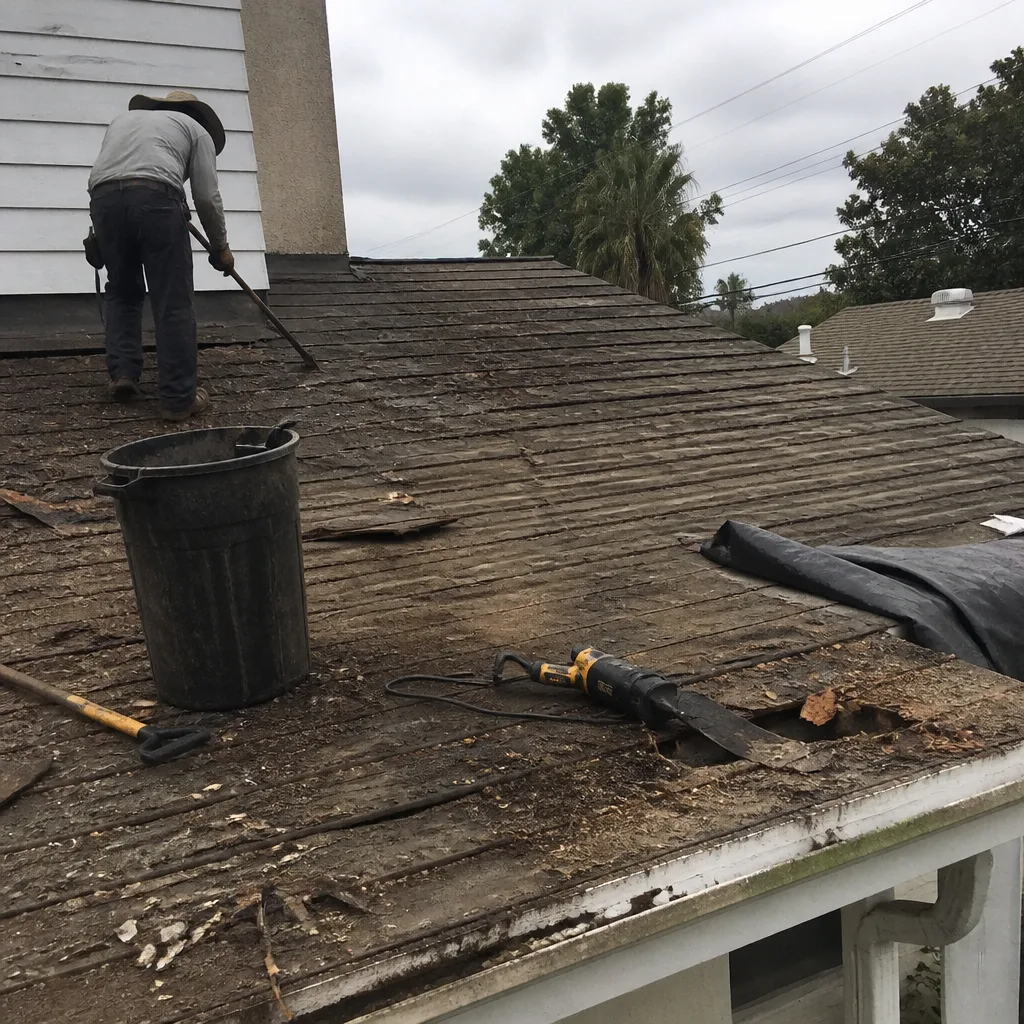 Before
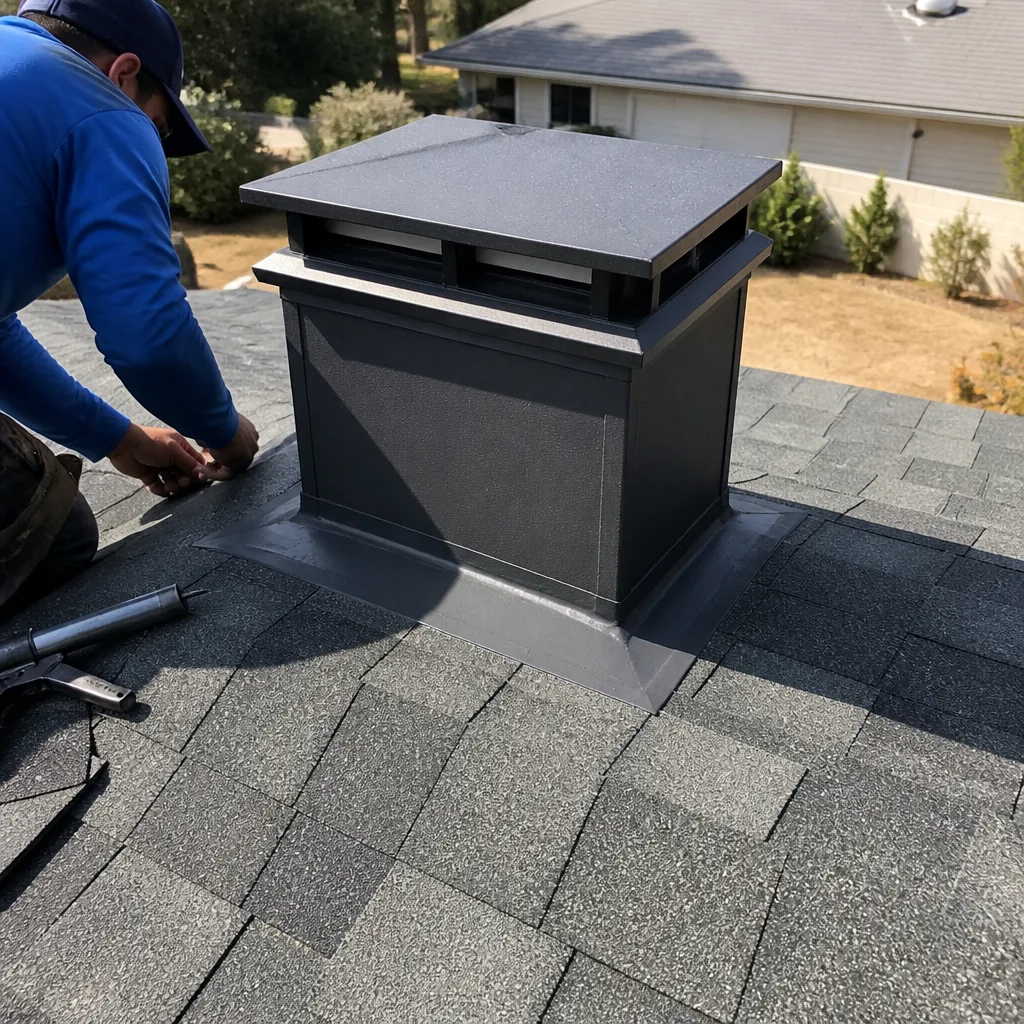 After
After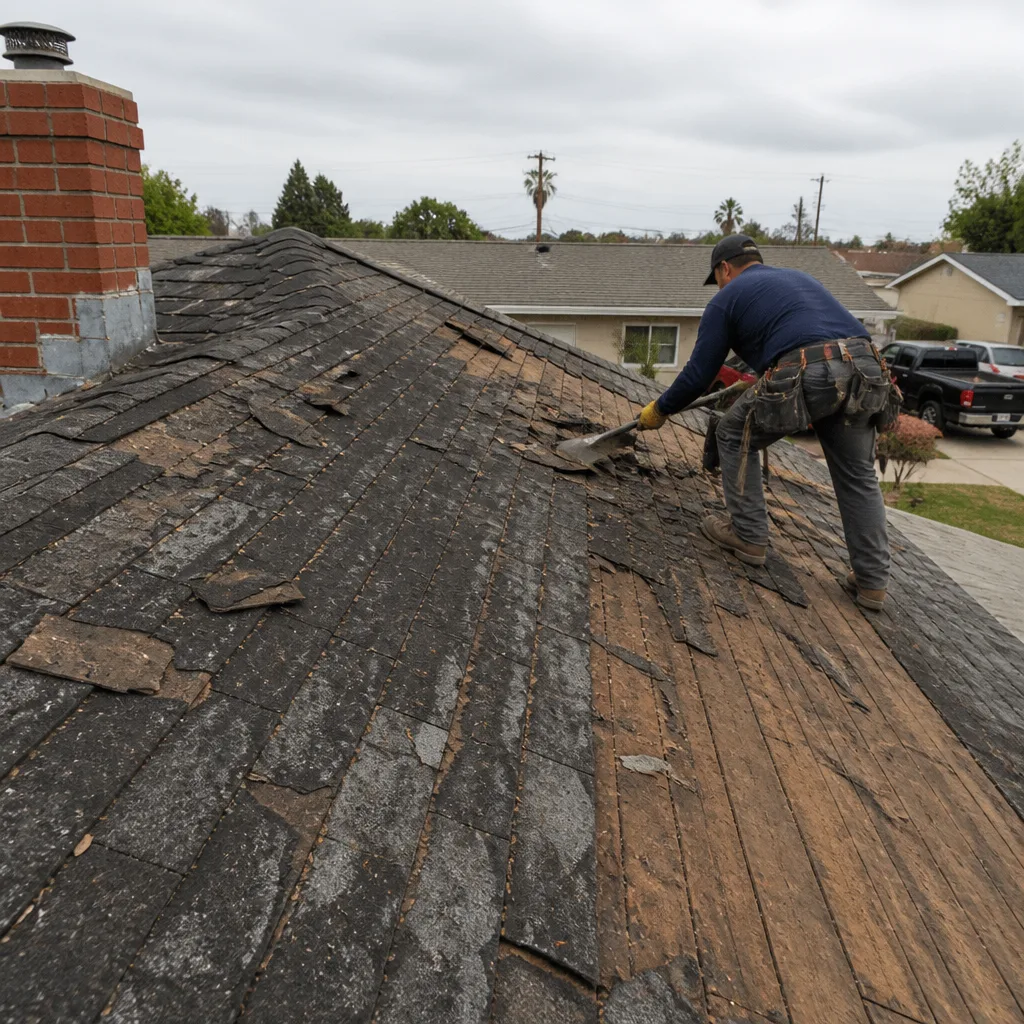 Before
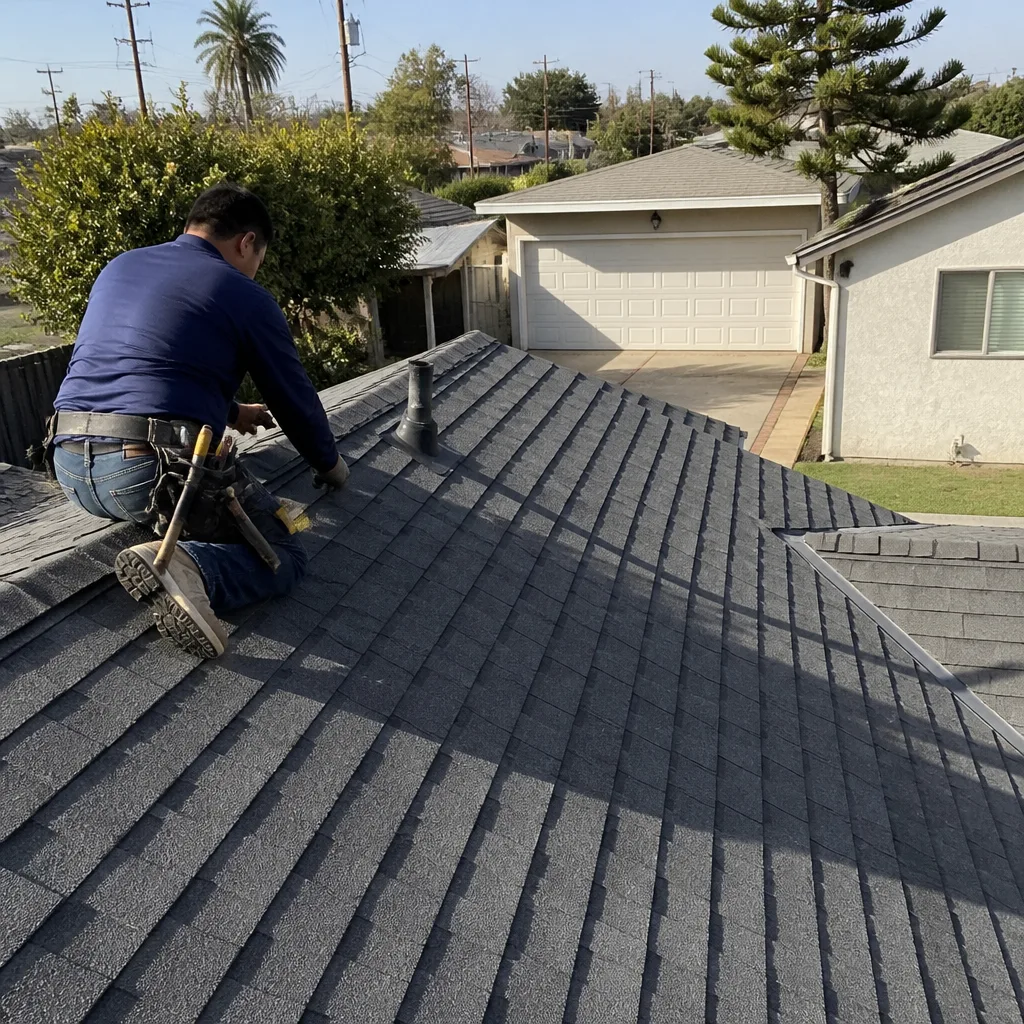 After
After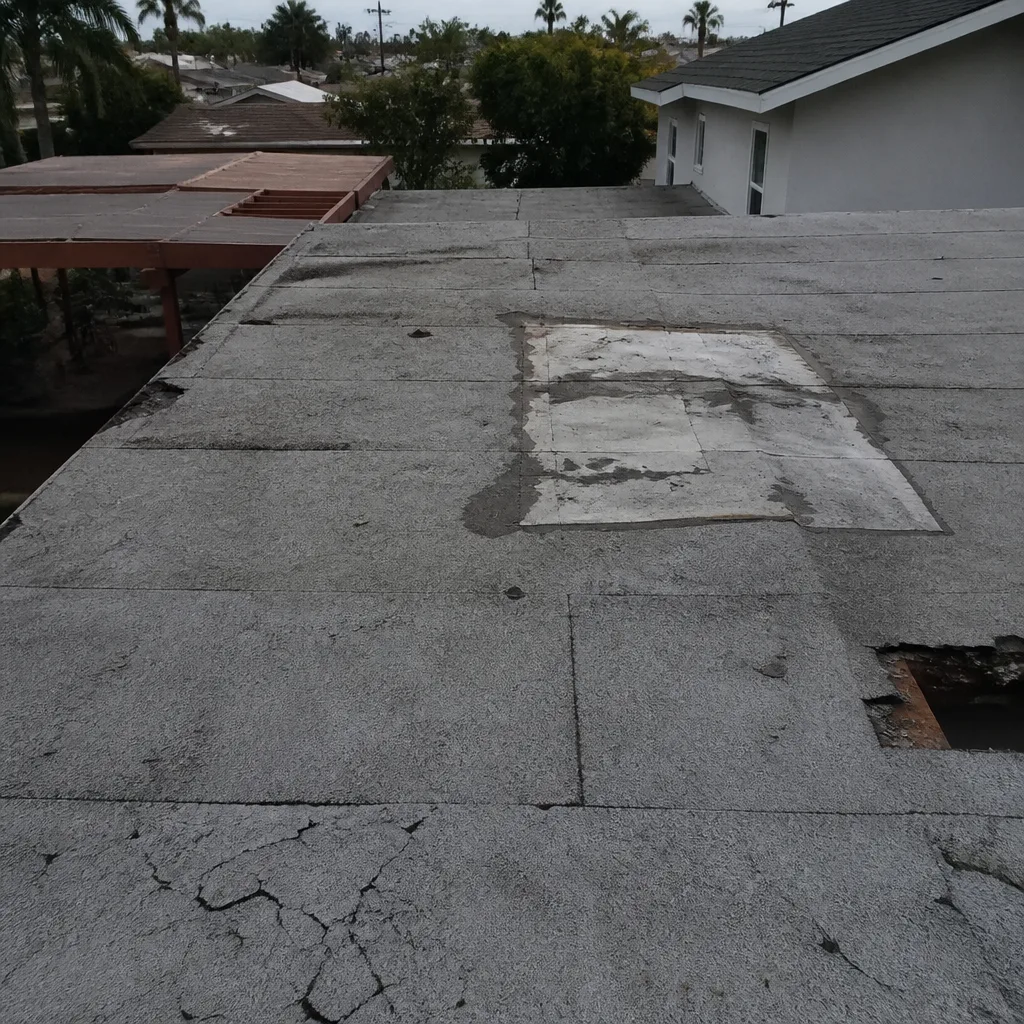 Before
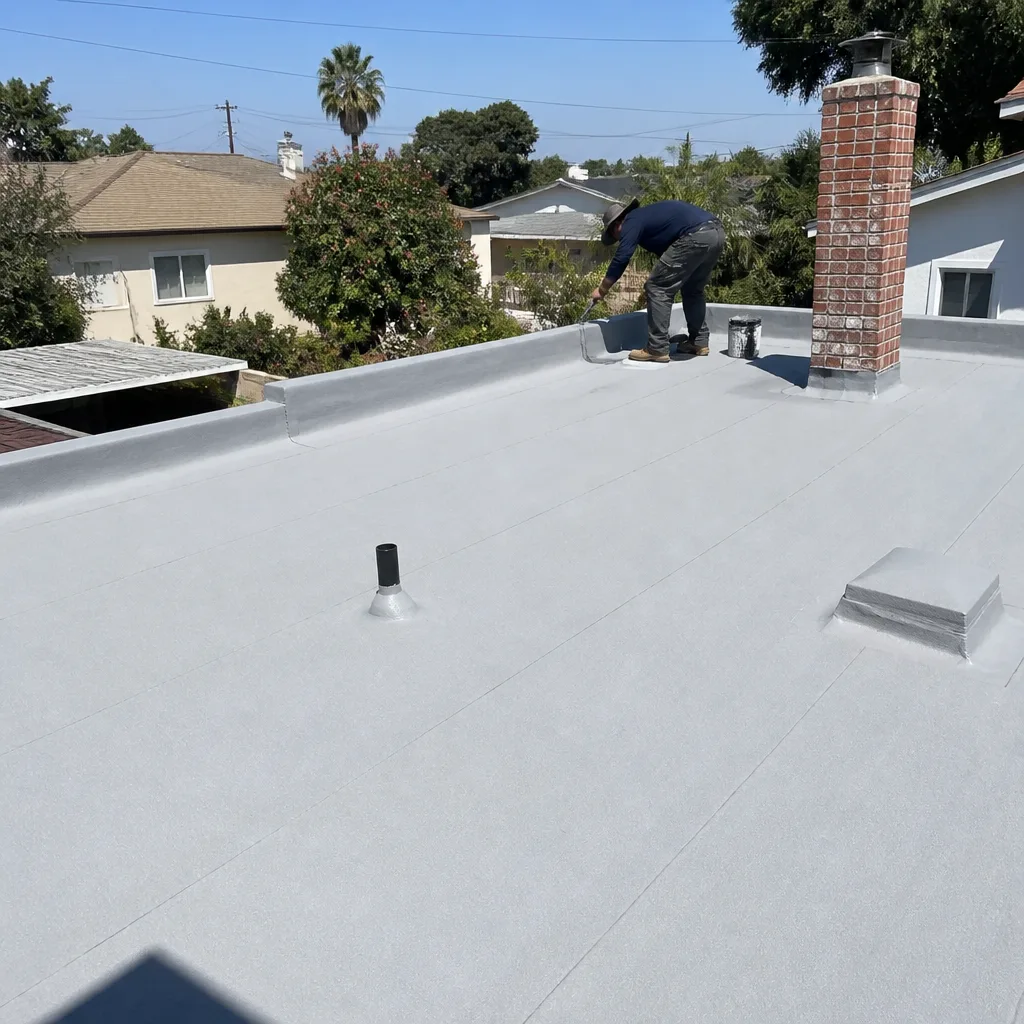 After
AfterWhen to Call a Professional
If your roof is at the point where a full replacement is on the horizon, or if a repair has grown beyond simple patching, call a licensed roof contractor before making decisions. Specifically, call us if you’re planning a re-roof in any Long Beach neighborhood, if you’ve been told by a roofer that “you don’t need a permit for this,” if your HOA has flagged your roof, or if you’re preparing to sell and need to understand what the city’s records show. Birchbark Roofing Long Beach offers free estimates in Long Beach – call (562) 512-7366 and a live person will answer, day or night.
Frequently Asked Questions
A typical single-family re-roof permit in Long Beach costs between $150 and $400 based on project valuation, with complex projects running higher. The exact fee appears on the permit application, and a trustworthy contractor shows it as a line item on the written estimate. Call (562) 512-7366 for a free estimate that includes the full permit picture.
No. California law allows a homeowner to pull an owner-builder permit for their own residence, but the permit is still required for any replacement over 100 square feet. The work must still pass inspection, and in Long Beach, the same Title 24 cool-roof requirements apply to homeowner projects as to contractor projects. We don’t recommend it on safety grounds – steep-slope work without training and proper tie-off is how falls happen, and the inspection burden remains.
Lenders often refuse to fund a buyer’s mortgage when unpermitted roof work is discovered during escrow, which forces a delay, an after-the-fact permit process, or a re-negotiated price. The seller typically pays for the permit and any corrective work, often costing more than the original permit would have. It’s the most common roofing-related surprise we hear about from Long Beach sellers.
In most cases, the price difference is marginal because major manufacturers like Owens Corning, IKO, Atlas, and Tamko build cool-roof granules into their standard product lines at scale. The cost only inflates when an HOA palette restricts you to a color that requires a specialty product. Ask to see the CRRC-rated shingle options in your color before assuming an upgrade cost.
For a straightforward steep-slope re-roof, the permit application usually clears within a week, and the inspections are spaced by the contractor’s schedule. The limiting factor is rarely the city; it’s coordinating tear-off, inspection, and finishing between weather windows. A well-sequenced job in Long Beach typically wraps the permit process within a few weeks.
The contractor is responsible for pulling the permit when they manage the project, and the permit application should be in their name with the homeowner listed as the property owner. If a contractor asks you to pull the homeowner permit rather than pulling it themselves, that’s often a red flag – they’re shifting the compliance burden onto you.
The Bottom Line
A California roofing permit is not complicated, but it is specific: the distinction between repair and replacement hinges on square footage, the Title 24 cool-roof standard is a real code with real ratings, and the Long Beach inspection sequence catches hidden problems before they become expensive ones. The permit is the only document that proves the roof was done to code, and that document is worth far more than its fee at resale, at insurance renewal, and in an HOA dispute. Choose a contractor who treats the permit as standard procedure, not an optional add-on, and you’ll avoid the trap that catches thousands of California homeowners every year. Browse more guides & resources to protect your investment.
Written by Erik Lindgren, Owner at Birchbark Roofing Long Beach, serving Long Beach since 2000.